XLR8 — an Android-controlled bot
A differential-drive racing bot driven from a phone, on a motor driver board I laid out myself because the ready-made one was the wrong shape.
XLR8, at the Electronics and Robotics Club, IIT Bombay, in my first weeks there: build a bot, race it round an obstacle course. Differential drive, four wheels, an ATTINY2313A, an L293D, and a phone for a remote control.
The interesting part is the board, and it is interesting for an unglamorous reason. A motor driver is a solved problem — you can buy an L293D module for almost nothing. What you cannot buy is one the right shape, with the connectors where your chassis needs them, thin enough to sit under a shell that has already been cut.
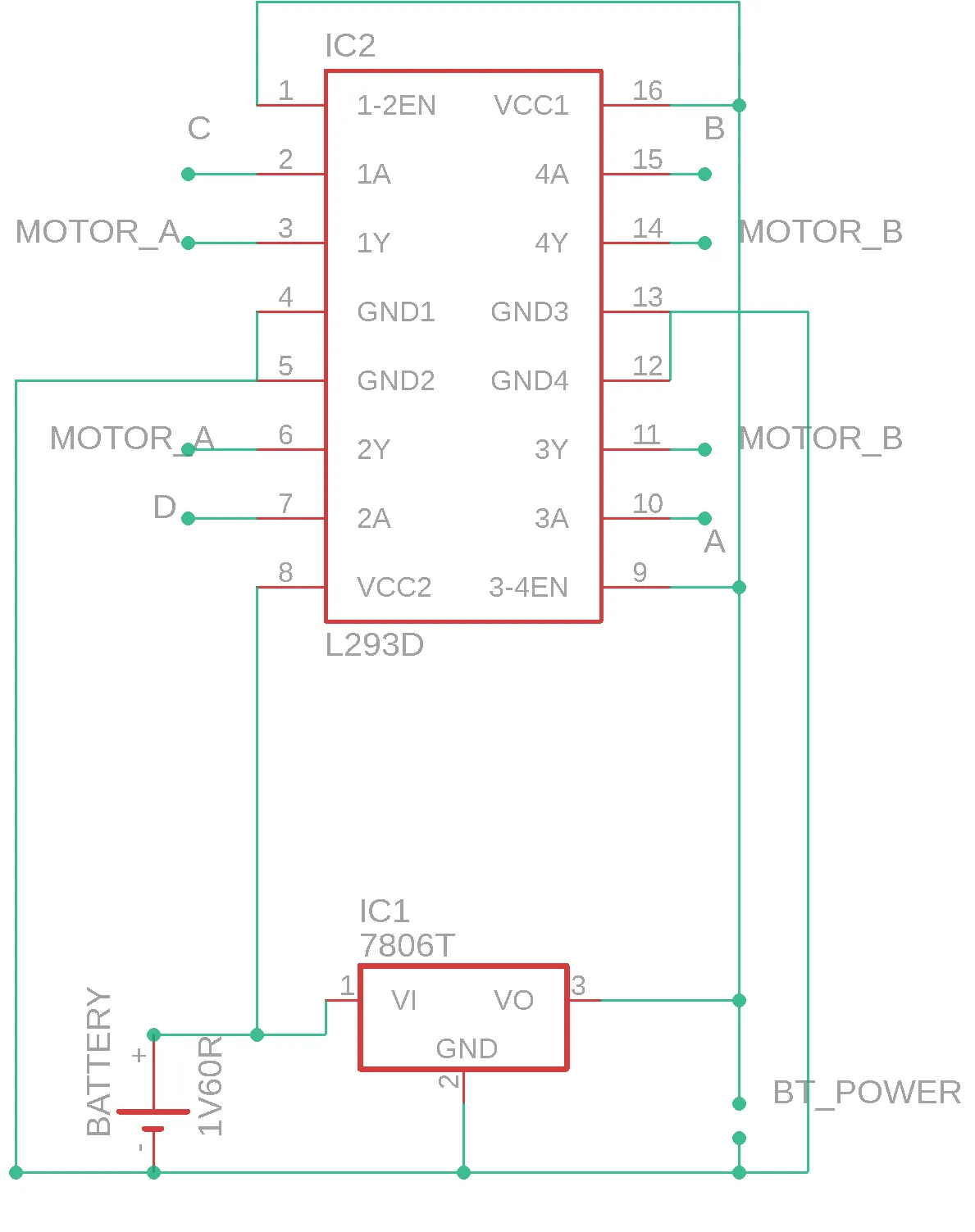
So it got laid out in Eagle: schematic, board, Gerbers, two revisions. The circuit is small enough to read in one look. One battery feeds the L293D’s motor rail directly and a 7806 regulator in parallel, and that regulator supplies both the logic and the Bluetooth module. That split is the only real design decision on the board: motors are electrically filthy, a radio link is the thing on the bot least able to tolerate a sagging supply, and keeping them on separate rails costs one part.
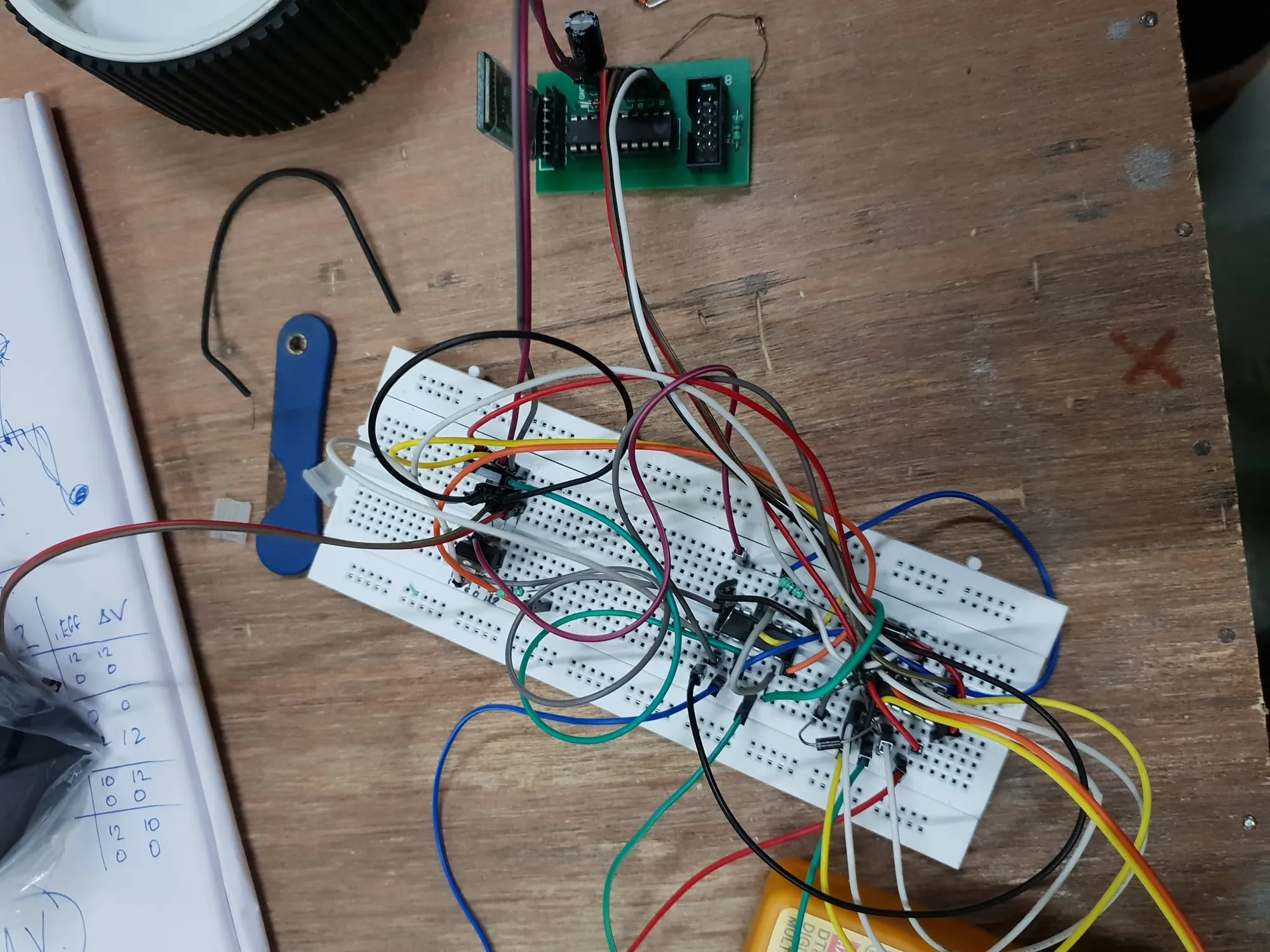
The rest was a first-year lesson in the gap between a schematic and a thing that moves — the sort of gap where the circuit is right and the bot still turns the wrong way.
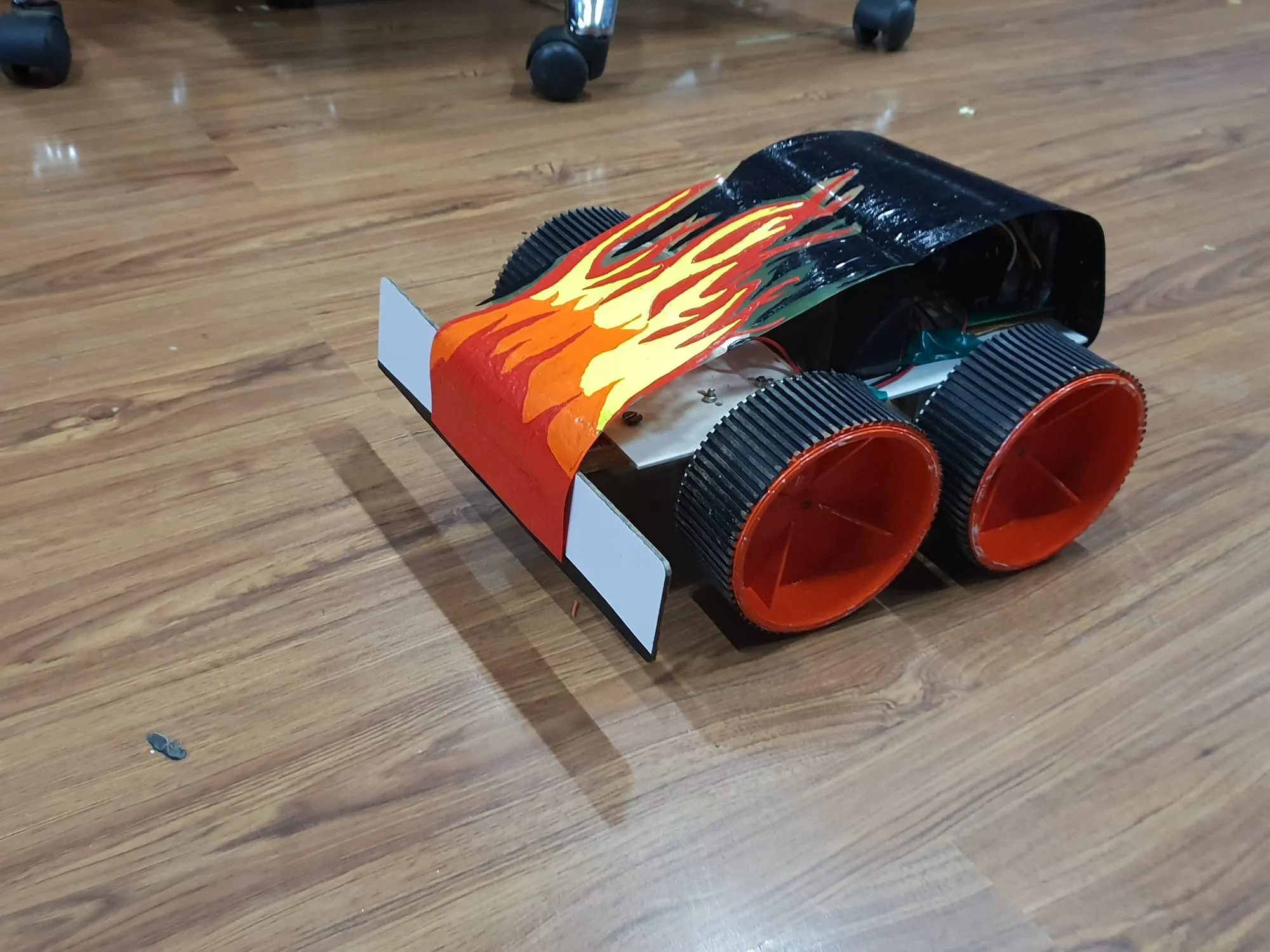
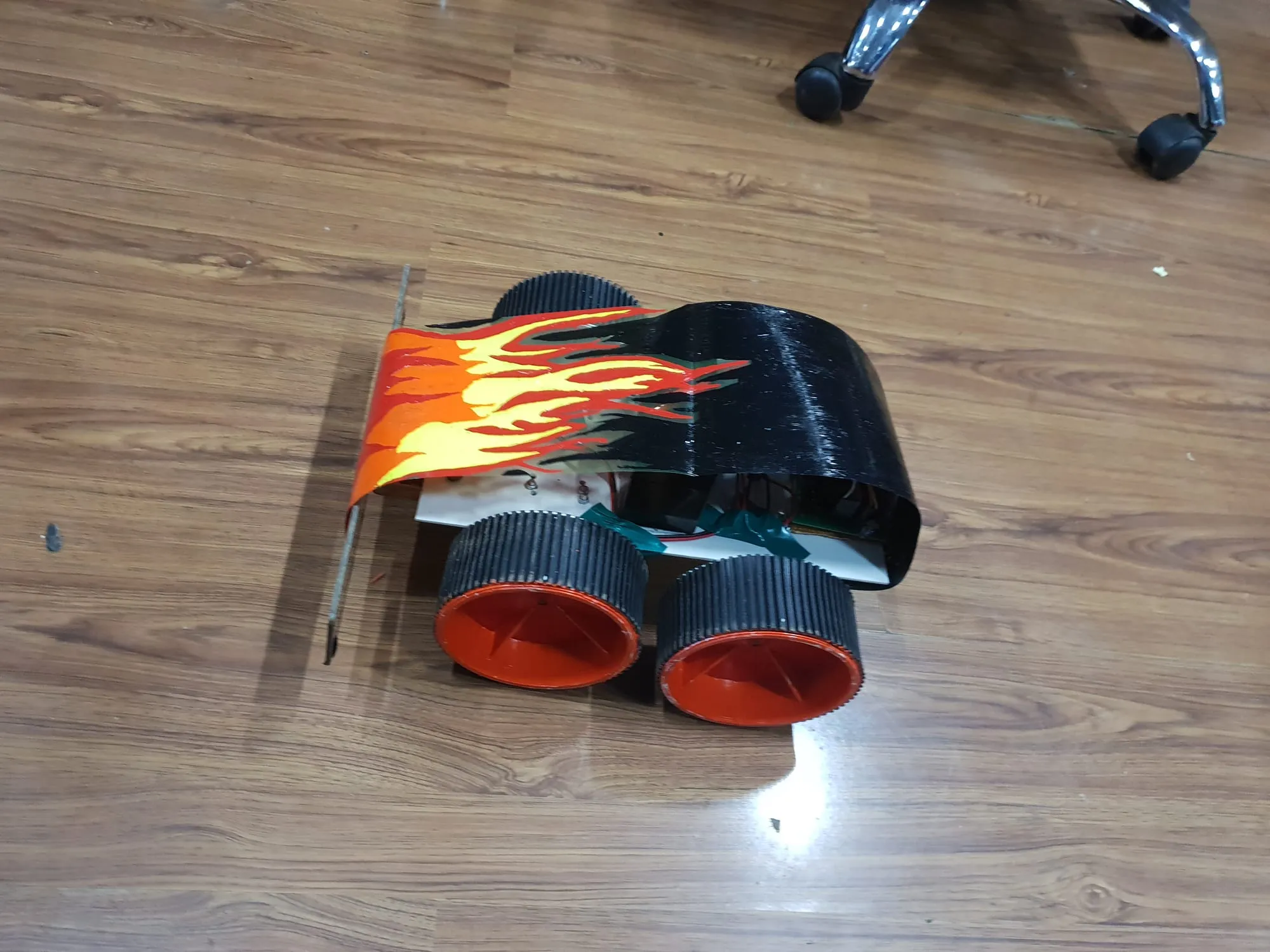
It went into a plastic shell, hand-painted, with a front wing that did nothing aerodynamic whatsoever at the speeds involved. That was not the point either.
Gallery
0303